If one side of your casserole comes out perfectly golden while the other side turns nearly black, your oven isn’t being inconsistent for no reason. Something inside the cavity is creating a hotter zone on that side, and once you know where to look, the cause is usually straightforward to track down.
This guide walks through the most common reasons this happens, how to tell them apart, and what it costs to fix each one.
Why One Side of Your Oven Runs Hotter Than the Other
Before you start troubleshooting, it helps to understand what kind of problem you’re actually dealing with and why it shows up the way it does.
This Is a Spatial Problem, Not a Temperature Problem
Your oven’s overall temperature setting might be perfectly accurate. The issue isn’t that the oven runs too hot or too cold overall, it’s that heat isn’t distributing evenly across the cavity, which creates a hotter zone on one side and a cooler zone on the other.
Side-to-Side vs. Top-to-Bottom Uneven Baking: Why This Guide Focuses on One
Uneven baking actually comes in two different patterns. Food that burns on top while staying raw in the middle is a vertical problem, usually tied to rack position or broil settings. Food that burns on one side while the other side stays undercooked is a lateral problem, and that’s the specific pattern this guide addresses.
Why This Is One of the Most Common Oven Complaints We Hear in Fallbrook
We hear this complaint regularly from Fallbrook homeowners, and it’s often mistaken for a cooking mistake before anyone suspects the oven itself. It’s a similar pattern to how homeowners often assume a gas oven igniter glowing but not lighting is just a fluke before realizing it’s a real mechanical issue.
What This Guide Will Help You Diagnose
By the end of this guide, you’ll know how to rule out simple explanations first, identify which internal component is most likely responsible, and understand what each repair typically costs.
Quick Checks to Rule Out Before You Suspect a Mechanical Failure
Before assuming something inside your oven has failed, a few simple checks can rule out explanations that have nothing to do with a broken part.
Is the Oven Actually Level?
An oven that isn’t sitting level can skew heat distribution from side to side, even when every internal component is working correctly. This is one of the easiest things to check and rule out first.
Are You Using the Right Rack Position for What You’re Cooking
Rack position affects how close your food sits to the heating elements, and a rack positioned too close to one side of the cavity, or installed crookedly in its tracks, can create uneven results that have nothing to do with a mechanical issue.
Could Your Bakeware Be the Real Problem
A warped or bent baking sheet can tilt food closer to the heat source on one side. Dark-colored pans also absorb more heat than light-colored ones, which can exaggerate uneven cooking if your oven already has a mild hot spot.
Did You Actually Preheat Fully Before Cooking
Opening the oven door or starting to cook before it reaches full temperature can create inconsistent results that look like a hot spot but are really just a timing issue. Give your oven the full preheat cycle before drawing conclusions.
Cause 1: A Failing or Blocked Convection Fan
The convection fan is responsible for circulating hot air evenly throughout the cavity, and it’s one of the first things a technician checks for this exact symptom.
Why Poor Air Circulation Creates a Hotter Zone on One Side
When the fan isn’t moving air properly, heat tends to pool near the heating element rather than spreading evenly across the cavity, which creates a noticeably hotter zone on whichever side sits closest to that concentrated heat.
Signs the Fan Has Stopped Working Entirely
If you no longer hear the fan running during a bake cycle, or you can’t feel any air movement when you briefly open the door, the fan motor has likely failed completely.
Signs the Fan Is Running but Not Circulating Air Properly
A fan that runs but spins weakly, makes unusual noise, or has a damaged blade can still create uneven airflow even though it technically hasn’t stopped working.
Cause 2: Uneven Heating Element Wear
Heating elements don’t always fail all at once. Sometimes they develop a weak spot that affects only part of the cavity.
How a Weak Spot in the Element Creates a Hotter Section Nearby
When a section of the heating element develops a weak spot, the area directly around it can actually run hotter as the element compensates, while the rest of the cavity runs cooler than it should.
Element durability also varies by manufacturer, which is worth keeping in mind if you’re shopping for a new oven built to hold up in the local climate.
Visual Signs: Cracks, Blisters, and Inconsistent Glow
Look for visible cracks, blistering, or a glow that isn’t consistent along the full length of the element. These are clear signs the element itself needs replacement.
Why This Cause Often Gets Blamed on “Bad Luck” With Recipes
Because the symptom shows up inconsistently depending on what and where you’re baking, many homeowners assume it’s a recipe or placement issue for months before realizing the element itself is the actual cause.
Cause 3: Warped or Misaligned Oven Racks
A rack problem is one of the simplest causes on this list, and also one of the easiest to overlook.
How a Bent Rack Tilts Food Closer to the Heat Source on One Side
A warped rack doesn’t sit flat, which means one side of your food ends up physically closer to the heating element than the other side, causing that side to cook and brown faster.
The Simple Way to Check a Rack for Warping
Remove the rack and set it on a flat countertop. If it rocks or doesn’t sit evenly, it’s bent and likely contributing to the uneven cooking you’re seeing.
Why Rack Position Alone Can Fix What Looks Like a Mechanical Problem
Sometimes simply replacing a warped rack, or reseating a rack that wasn’t fully locked into its tracks, resolves the issue entirely without any repair to the oven itself.
Cause 4: An Oven That Isn’t Level
An unlevel oven affects more than just rack position. It can genuinely skew how heat distributes throughout the entire cavity.
How an Unlevel Oven Skews Heat Distribution Side to Side
When an oven isn’t level, batters and liquids can pool toward one side during baking, and the airflow pattern inside the cavity can shift as well, both of which contribute to one side cooking faster than the other.
This is the same basic leveling principle we cover in our guide on stopping a washing machine from walking or vibrating, where an unlevel appliance causes problems that have nothing to do with a broken part.
The 60-Second Level Test
Place a carpenter’s level on the center rack and check it both side to side and front to back. This takes less than a minute and immediately tells you whether leveling is part of the problem.
Adjusting the Feet to Correct It
If your oven has adjustable feet, turn them until the level reads evenly in both directions. This is a free fix that resolves the issue completely if leveling was the actual cause.
Cause 5: A Drifting or Miscalibrated Temperature Sensor
A sensor issue behaves differently from the other causes on this list, and it’s worth recognizing the distinct pattern.
Why This Usually Shows Up Suddenly, Not Gradually
Unlike a wearing heating element, a sensor problem often appears suddenly after months of normal baking, which is a useful clue that points toward calibration drift rather than physical component wear.
Control board and sensor issues like this one are becoming more common on newer electronic ranges, a trend we cover in more depth in our gas versus electric oven repair comparison.
The Bread Test: A Simple Way to Confirm Hot Spots
Place slices of bread across the oven rack and bake them at a moderate temperature for several minutes. Uneven browning patterns across the slices confirm where the hot spots actually are.
Recalibrating vs. Replacing the Sensor
Many ovens allow for a manual temperature calibration adjustment through the control panel, which can resolve minor drift. If the sensor itself has failed rather than simply drifted, it needs to be replaced rather than recalibrated.
Quick Fixes While You Wait for a Repair
If you’re not ready to schedule a repair yet, a few temporary workarounds can help in the meantime.
Rotating Food Halfway Through Cooking
Rotating your pan 180 degrees halfway through the cook time is one of the simplest ways to even out the results of a hot spot without touching the oven itself.
Using a Baking Stone to Even Out Hot Spots
A baking stone placed on the rack absorbs and redistributes heat more evenly across the cavity, which can meaningfully reduce the effect of a hot spot while you wait for a repair.
Shielding One Side With Foil as a Temporary Workaround
Placing a small piece of foil over the side of your dish that tends to burn first can slow heat absorption on that side just enough to even out the results for a single bake.
DIY Diagnosis vs. When to Call a Professional
Some of the troubleshooting in this guide is entirely safe to do yourself, while the actual repairs usually call for a professional.
Checks You Can Safely Do Yourself
Leveling the oven, checking and replacing a warped rack, running the bread test, and rotating food during cooking are all safe, straightforward tasks for any homeowner.
Why Element, Fan Motor, and Sensor Repairs Usually Need a Technician
Replacing a heating element, fan motor, or temperature sensor involves working with electrical components inside the oven cavity, which is best left to a trained technician rather than attempted as a DIY repair.
Choosing a local, independent technician for work like this is also one small way of supporting local trades in Fallbrook instead of a national chain.
How a Professional Narrows Down the Exact Cause Faster
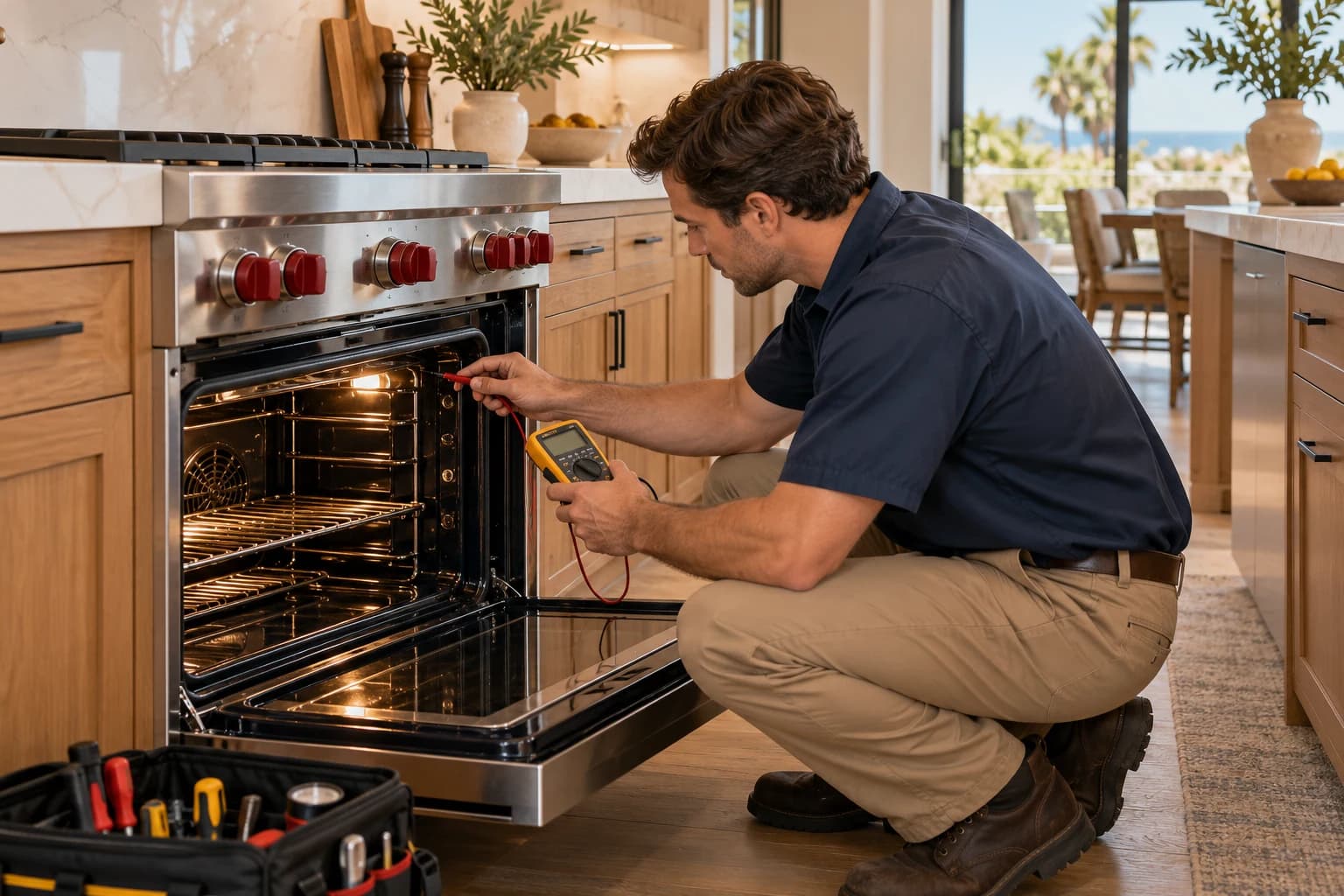
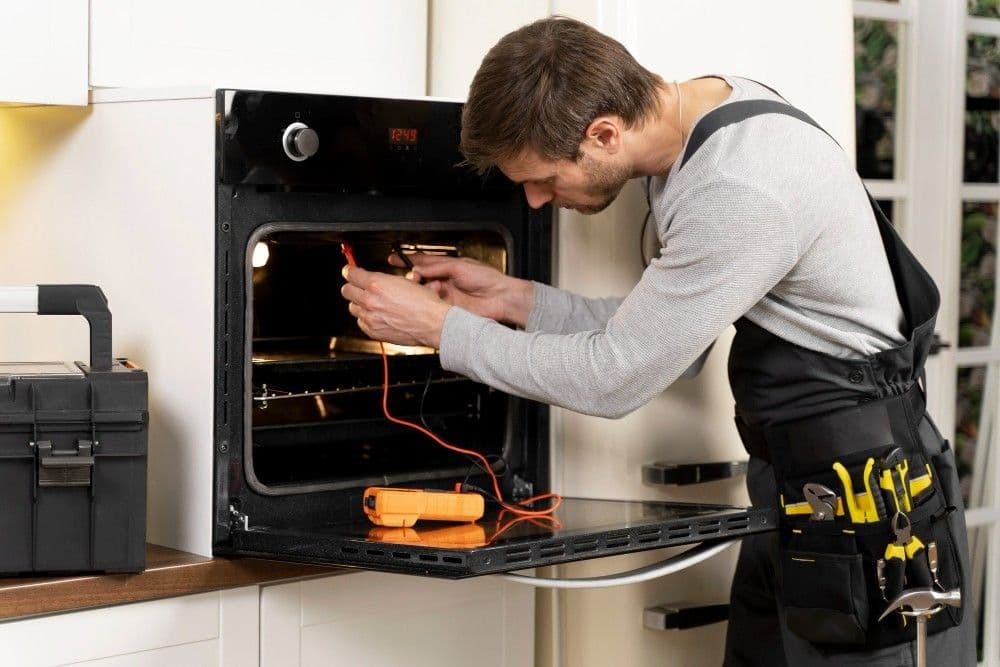
A technician can usually confirm which component is responsible within minutes using proper testing equipment, rather than spending weeks guessing through trial and error on your own.
Repair Costs for Uneven Oven Heating
Knowing roughly what each repair costs helps you plan ahead once you’ve narrowed down the likely cause.
Convection Fan Motor Repair Cost
Convection fan motor replacement is a moderate-cost repair, since the part itself along with the labor to access it inside the oven cavity both factor into the final price.
Heating Element Replacement Cost
Heating element replacement is generally one of the more affordable oven repairs, similar in cost range to other common oven part replacements.
Temperature Sensor Repair or Recalibration Cost
Sensor recalibration through the control panel costs nothing if you’re comfortable doing it yourself, while full sensor replacement is a relatively affordable repair when recalibration doesn’t resolve the issue.
If your oven has needed several of these repairs already, it may be more cost effective to replace it, and when that time comes, local recycling centers for old appliances make disposal easy.
Why Choose a Local Fallbrook, CA Appliance Repair Team
Working with a local team means faster, more accurate diagnosis instead of replacing parts through trial and error.
Accurate Diagnosis Instead of Guessing Which Part Failed
A proper inspection identifies exactly which component is causing the uneven heating, which saves you from replacing a part that was never the actual problem. It’s part of why homeowners across Fallbrook keep choosing the same local team for appliance repairs.
Certified Technicians for Gas and Electric Ovens, All Major Brands
Our technicians diagnose and repair heating issues on both gas and electric ovens from all major brands, no matter the cause behind the uneven heat.
What a Full Oven Heat Diagnostic Includes
A thorough diagnostic visit checks the convection fan, heating elements, temperature sensor, and rack alignment, so you get a confirmed answer instead of a guess. If your oven has needed multiple repairs over the years, it’s worth weighing that against the same repair-or-replace reasoning that applies to an aging refrigerator.
If your oven is burning food on one side, Appliance Repair Fallbrook can find the exact cause. Contact us to schedule a diagnostic visit.