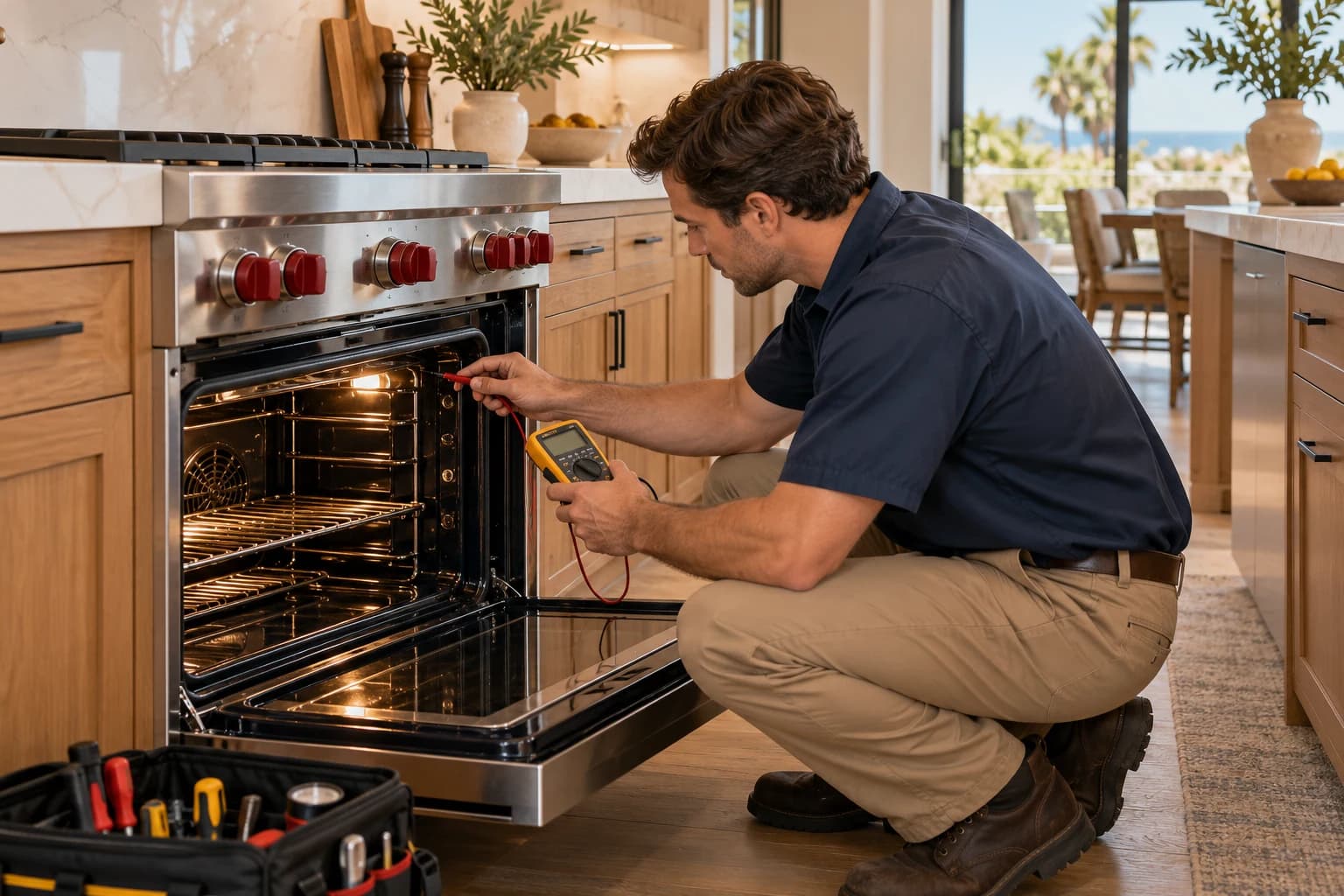
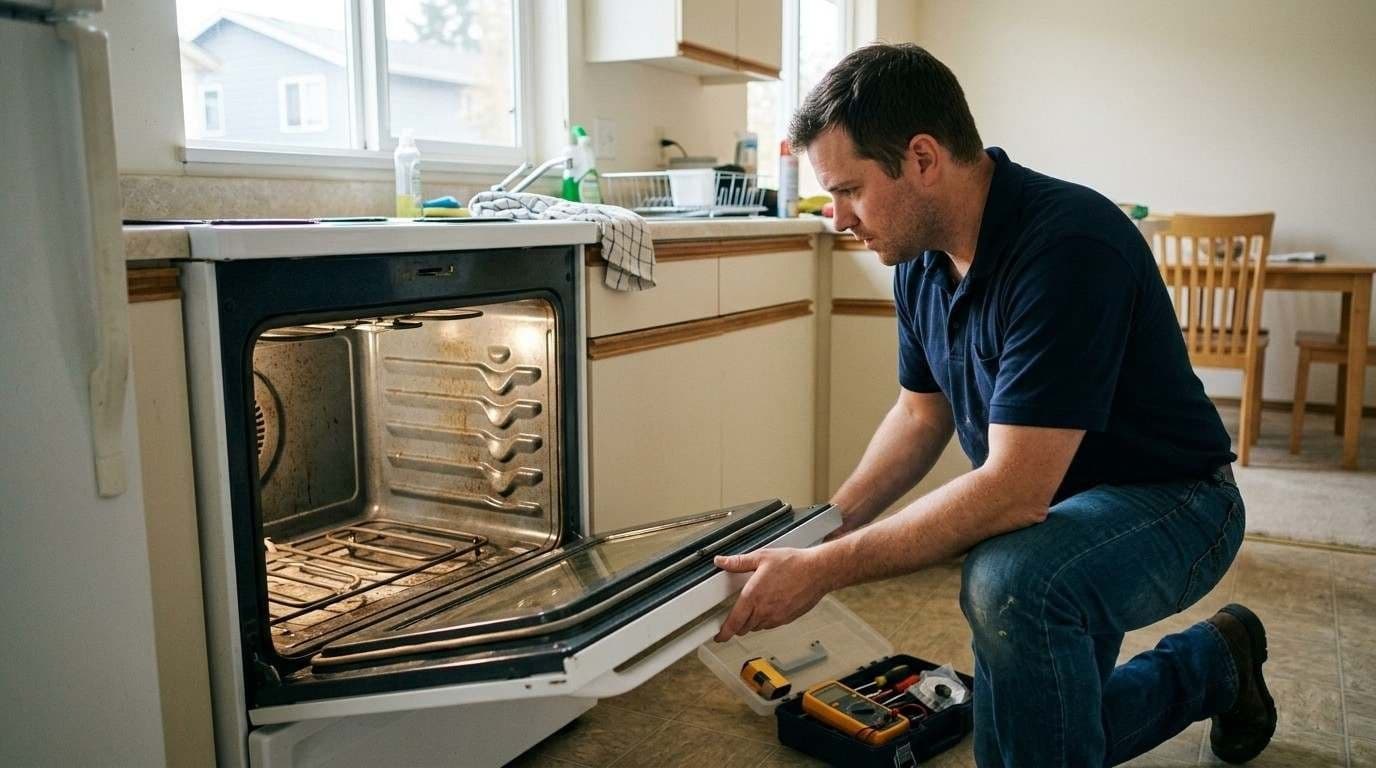
If your oven just stopped heating properly, you’re probably wondering whether this is a common problem or a sign something bigger is wrong. The answer depends heavily on whether you have a gas or electric oven, since the two systems fail in completely different ways.
This guide breaks down exactly what tends to go wrong with each type, how often those repairs actually happen, and what you can expect to pay when they do.
Why This Question Matters Before You Call for Service
Knowing what typically fails on your specific oven type helps you understand what you’re dealing with before a technician ever walks through the door.
The Short Answer: It’s Close, But the Failure Patterns Are Very Different
Gas and electric ovens break down at roughly similar overall rates, but the specific parts that fail, and how often a repair needs a follow-up visit, differ quite a bit between the two.
Why Homeowners in Fallbrook Ask Us This Before Choosing a New Oven
We hear this question often from homeowners deciding between a gas or electric replacement, usually after their current oven has needed one too many repairs. This comes up especially often in older Fallbrook properties, similar to the kind of appliance decisions covered in our restoring comfort to a historic Fallbrook home story, where aging systems eventually need a clear replacement plan.
What This Guide Compares (And What It Doesn’t)
This guide focuses specifically on repair frequency, common failure points, and cost. It doesn’t cover cooking performance or energy efficiency in depth, since those deserve their own comparison and don’t affect how often either type needs service.
How Gas and Electric Ovens Actually Differ Under the Hood
Understanding the core mechanical difference between these two oven types makes it much easier to understand why they fail so differently.
Gas Ovens: Igniter, Gas Valve, and Burner-Driven Heat
A gas oven uses an igniter to reach a specific temperature that triggers the gas valve to open, allowing gas to flow to the burner and ignite. This is a largely mechanical process with relatively few electronic components involved.
Electric Ovens: Heating Elements, Sensors, and Control Boards
An electric oven relies on a bake element and broil element to generate heat directly, along with a network of sensors, switches, and a control board to regulate temperature throughout the cooking process.
Why That One Difference Shapes Almost Every Repair Call
Because gas ovens depend mostly on mechanical parts, while electric ovens depend heavily on electronics, the two systems tend to fail in very different ways, and that difference shows up clearly once you look at the most common repairs for each.
The Most Common Gas Oven Repairs
Gas oven problems tend to cluster around a small handful of parts, and one component shows up far more than any other.
Igniter Failure: By Far the Most Frequent Gas Oven Repair
The igniter is the single most frequently replaced part on a gas oven. A weak or failed igniter can’t generate enough heat to trigger the gas valve, which means the oven either won’t light at all or takes an unusually long time to start heating.
Weak, Uneven, or Yellow Flame From Burner Buildup
Food drippings, grease, and carbon buildup around the burner can restrict gas flow and cause a weak or uneven flame. A technician can clean the burner and check for hidden damage that a simple cleaning won’t reveal.
Gas Valve and Safety Valve Problems
If the igniter is working but the oven still won’t light, the safety valve may be stuck closed. This isn’t something to troubleshoot yourself, since gas components require professional testing to diagnose and repair safely.
Why Gas Ovens Often Get Fixed in a Single Visit
Because gas oven problems tend to involve a small number of well-understood parts, technicians frequently diagnose and complete the repair in one visit without needing to order a part and come back.
The Most Common Electric Oven Repairs
Electric ovens fail for very different reasons, almost always tracing back to an electrical component rather than a mechanical one.
Bake or Broil Element Failure: The Electric Equivalent of the Igniter
A failed bake element is the most common reason an electric oven won’t heat, functioning as the electric equivalent of a gas igniter failure. When the element burns out, the oven simply can’t reach temperature.
Thermostat and Temperature Sensor Issues
Electric ovens rely heavily on sensors to regulate heat throughout the cooking process. A damaged or misreading sensor can cause the oven to run too hot, too cool, or shut off unexpectedly mid-cycle.
Control Board Failures on Newer, Smart-Enabled Models
Modern electric ovens with smart features and digital displays add a control board into the mix, and these boards represent a newer, increasingly common point of failure that didn’t exist on older, simpler models.
Why Electric Repairs More Often Require a Part Order
Electric oven repairs are somewhat more likely to require ordering a specific part before the job can be completed, particularly for control board or sensor issues, compared to the more standardized parts used in gas oven repairs.
Which One Actually Breaks Down More Often?
This is the core question homeowners actually want answered, and the honest answer requires looking at more than one angle.
How Often Each Type Actually Generates a Service Call
Gas and electric ovens generate service calls at fairly comparable rates overall. Neither type is dramatically more reliable than the other when you look at how often a homeowner ends up needing a technician in the first place.
Why “More Common” Depends on What You’re Counting
If you’re counting total repair calls, the two types are close. If you’re counting how often a single visit resolves the issue versus needing a follow-up, gas ovens tend to come out ahead, since their most common failure, the igniter, is usually diagnosed and fixed immediately.
How Smart Features Are Changing Electric Oven Failure Rates
Newer electric ovens with smart features and digital controls have measurably higher service rates than older, simpler electric models, since more electronic components create more potential points of failure. The upside is that smart diagnostics can sometimes catch a developing problem earlier, which somewhat offsets the added complexity.
Repair Cost Comparison: Gas vs. Electric
Cost differences between the two types are smaller than most homeowners expect, but they do exist.
Average Cost of the Most Common Gas Repair (Igniter)
Igniter replacement is generally one of the more affordable common oven repairs, since the part itself is inexpensive and the labor involved is usually straightforward.
Average Cost of the Most Common Electric Repair (Bake Element)
Bake element replacement is also a relatively affordable and common repair, generally landing in a similar cost range to igniter replacement on the gas side.
Why Control Board Repairs Push Electric Costs Higher
When the issue is a control board rather than a simple element, electric oven repair costs climb noticeably higher, since control boards are more expensive parts and often require more diagnostic time to confirm as the actual cause.
Dual-Fuel Ranges: Why Repairs Cost More When Both Systems Are Involved
Dual-fuel ranges combine a gas cooktop with an electric oven, which means a technician sometimes needs both gas and electrical expertise on the same visit. This combined complexity tends to push dual-fuel repair costs higher than either single-fuel type on its own.
Lifespan and Long-Term Reliability
Beyond individual repairs, it’s worth understanding how each oven type holds up over its full lifespan.
Why Gas Ovens Tend to Last Slightly Longer
Gas ovens generally have a year or two longer lifespan than electric ovens on average, largely because gas burners involve fewer electronic components that can degrade or fail over time.
What Shortens an Electric Oven’s Lifespan Faster
Electric ovens are more likely to see their lifespan shortened by control board or sensor failures, particularly on units with smart features, compared to the more mechanically straightforward failure modes of a gas oven.
When Frequent Repairs Signal It’s Time to Replace, Not Repair
If your oven has needed multiple repairs within a short period, it’s worth weighing that cost against the price of a new unit. The same repair-or-replace reasoning that applies to an aging refrigerator works just as well for an oven approaching the end of its expected lifespan, and if you do decide to replace it, local recycling centers for old appliances make disposal easy.
Safety Considerations That Go Beyond Repair Frequency
Repair frequency isn’t the only factor worth weighing. The safety profile of each oven type is genuinely different too.
Gas-Specific Risks: Leaks, Carbon Monoxide, and Why DIY Isn’t an Option
Gas ovens involve live gas lines, and a loose connection creates a real explosion and carbon monoxide risk. Persistent gas odors should always be treated as a safety concern and inspected by a professional immediately rather than investigated yourself.
This is the same category of combustion-related risk we cover in our guide on dryer vent fire safety, where a seemingly minor issue can carry real fire or safety consequences if ignored.
Electric-Specific Risks: High-Voltage Components and Wiring
Electric ovens run on high-voltage circuits, and working around exposed wiring or a faulty control board carries its own serious risk if handled incorrectly.
Why Both Types Deserve a Professional for Anything Beyond Basic Maintenance
Neither oven type is inherently safer to work on yourself. Gas carries combustion and leak risk, while electric carries high-voltage risk, and both deserve a trained technician for anything beyond routine cleaning.
DIY vs. Professional Repair: What’s Actually Safe to Attempt
Some maintenance is reasonable to handle yourself, while most actual repairs on either oven type are better left to a professional.
Minor Maintenance Homeowners Can Handle on Either Type
Cleaning the exterior, wiping down the oven cavity, and checking the door seal for wear are all safe tasks for most homeowners on either gas or electric models.
Why Gas Component Repairs Should Never Be DIY
Igniter, gas valve, and burner repairs involve fuel and combustion components, which carry genuine safety risks if handled incorrectly. These repairs should always go to a licensed technician.
Why Electric Control Board and Wiring Work Also Belongs to a Professional
Control board diagnosis and any repair involving internal wiring on an electric oven carries a real shock risk and should also be left to a trained technician rather than attempted as a weekend project.
Choosing Between Gas and Electric If Repair Frequency Matters to You
If you’re weighing a replacement and repair history is a real factor in your decision, here’s how the data breaks down practically.
If You Want Fewer Complex Repairs Over Time
Gas ovens tend to involve a smaller, more predictable set of repairs, mostly centered on the igniter, which makes them a reasonable choice if you want fewer complex, multi-visit repairs over the life of the appliance.
If You Want Lower Cost Per Repair Visit
Both types are fairly close on cost for their most common individual repair, though gas tends to edge out slightly ahead on average due to the low cost of igniter replacement specifically.
Why Cooking Preference Should Still Come Before Repair Statistics
The repair frequency difference between gas and electric is real but relatively small in the bigger picture. Your cooking preference, whether you value the responsiveness of a gas flame or the even heat of an electric element, should still be the deciding factor, with repair data as a secondary consideration.
Why Choose a Local Fallbrook, CA Appliance Repair Team
Working with a local team means faster, more accurate diagnosis regardless of which oven type you own.
Certified Technicians for Gas and Electric Ovens, All Major Brands
Our technicians repair gas and electric ovens from all major brands, and some brands hold up more reliably than others over time, which is worth knowing if you’re comparing options for a gas oven built for the local climate.
Same-Day Diagnosis for Ovens That Won’t Heat Properly
Same-day service means you’re not stuck guessing whether your oven issue is a simple igniter problem or something more involved, and a technician can usually identify the cause quickly. Choosing a local company for a repair like this is also one small way of supporting local trades in Fallbrook instead of a national chain.
What a Full Oven Diagnostic Visit Includes
A thorough diagnostic visit checks the igniter or heating element, sensors, and safety components specific to your oven type, so you get a clear answer instead of a guess. It’s part of why homeowners across Fallbrook keep choosing the same local team for appliance repairs. If your oven isn’t heating properly, Appliance Repair Fallbrook can find the exact cause. Contact us to schedule a diagnostic visit.